
Know the Signs and Symptoms
Hyperammonemia can present at any age and in many different ways. Symptoms are often nonspecific and may initially suggest infection, liver disease, neurological illness, or another diagnosis.
When symptoms are unexplained or the clinical picture does not make sense, consider a plasma ammonia level.
Different symptoms.
Same test.
CHECK AMMONIA.
Delayed recognition and treatment of hyperammonemia can result in serious neurological injury.
Learn How to Test →Check Ammonia in a Newborn With Unexplained Symptoms
Hyperammonemia in a newborn can resemble sepsis or other common neonatal illnesses. A plasma ammonia level can provide an important clue when symptoms remain unexplained.
Poor Feeding or Vomiting
Alteration in Consciousness
Encephalopathy
Respiratory Distress
Symptoms May Include
- Somnolence, lethargy, or progression toward coma
- Acute encephalopathy or cerebral edema
- Seizures associated with altered consciousness
- Tachypnea, hyperventilation, or respiratory alkalosis
- Sepsis like presentation or temperature instability
- Hypotonia or abnormal neurological posturing
- Irritability
- Hepatomegaly
- Multiorgan or circulatory failure
Feeding Changes Matter
- Progressively poor appetite
- Poor feeding
- Vomiting
Think Inborn Errors of Metabolism
Early hyperammonemia can mimic sepsis. In a full term newborn without clear risk factors, severe hyperammonemia developing after the first day of life should raise concern for a urea cycle disorder, organic acidemia, or another metabolic condition.
A confirmed infection also does not necessarily exclude an underlying hyperammonemic disorder.
Other Causes of Hyperammonemia in Neonates
Both inherited metabolic disorders and acquired conditions should be considered when evaluating a newborn with hyperammonemia.
Inborn Errors of Metabolism
- Urea cycle disorders
- Transport defects involving urea cycle intermediates
- Organic acidemias
- Fatty acid oxidation disorders
- Ornithine aminotransferase deficiency
- Pyruvate metabolism disorders
- Liver failure secondary to an inherited metabolic disorder
Nonmetabolic Causes
- Severe sepsis
- Liver failure
- Intrahepatic or extrahepatic shunting
- Transient hyperammonemia of the newborn
- Herpes simplex infection
- Infection with urea splitting organisms
Hyperammonemia Can Present Later in Life
Symptoms may be neurological, psychiatric, gastrointestinal, developmental, or behavioral. Presentation may be episodic and can occur after years of apparently normal health.
GI Presentations
Alterations in Consciousness
Encephalopathy
Learning or Developmental Problems
Psychiatric Presentations
Movement Disorders or Seizures
Neurological Presentations
- Confusion, lethargy, or dizziness
- Migraine like headaches
- Tremor, ataxia, or dysarthria
- Learning or developmental disability
- Seizures
- Focal neurological symptoms
- Coma
Psychiatric & Behavioral Presentations
- Behavioral or mood changes
- Hyperactivity or unusual agitation
- Aggressiveness or combativeness
- Delusions or psychosis
- Sleep disturbance
Gastrointestinal Presentations
- Abdominal pain
- Nausea or vomiting
- Protein aversion or self selected low protein intake
- Failure to thrive
- Hepatomegaly or elevated liver enzymes
Think Inborn Errors of Metabolism
Liver disease is an important cause of hyperammonemia, but it is not the only cause. When ammonia is elevated, particularly when the clinical presentation is unusual, clinicians should also consider a late onset urea cycle disorder or another metabolic condition.
Metabolic Disorders That May Cause Hyperammonemia
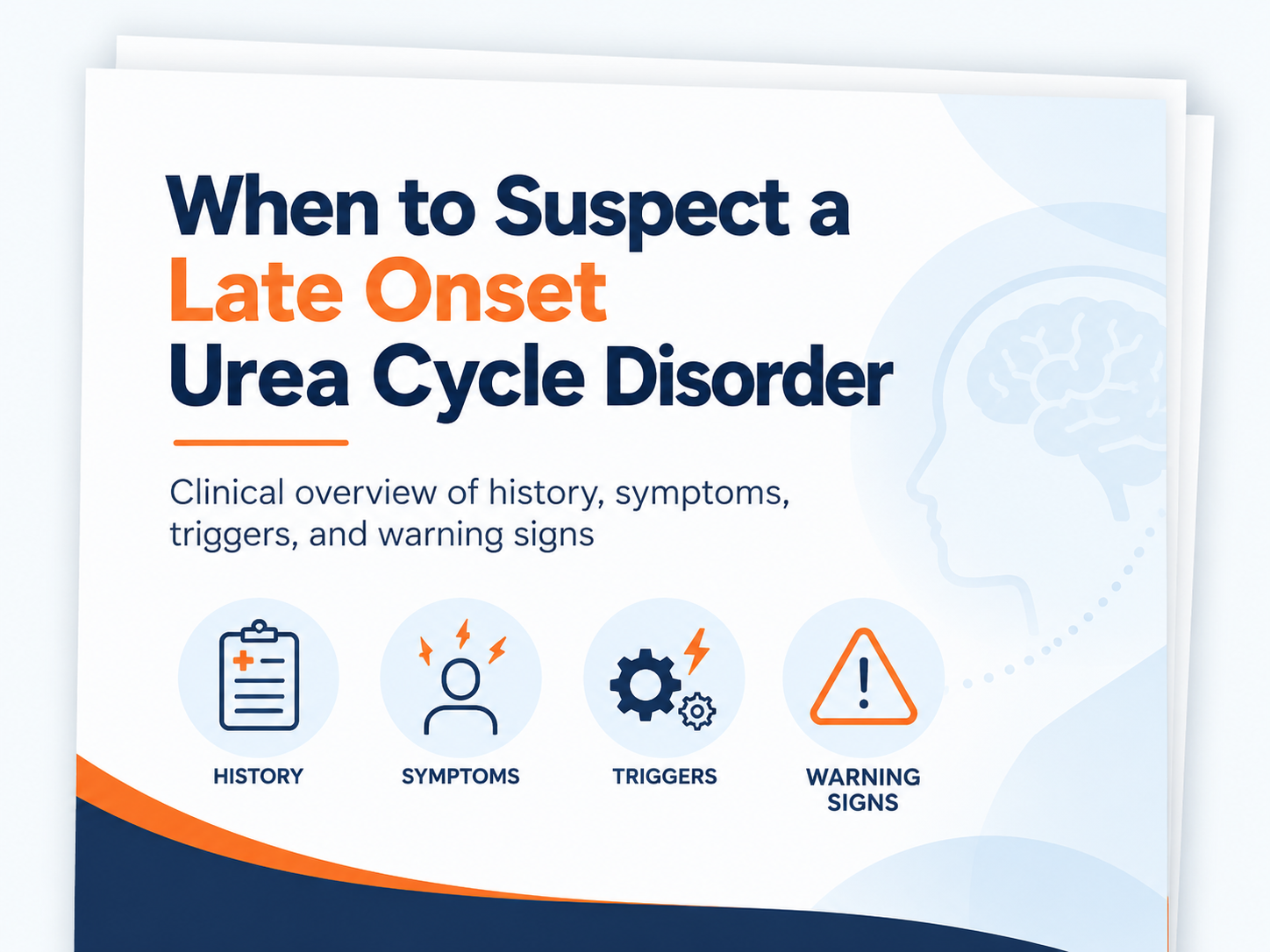
When to Suspect a Late Onset Urea Cycle Disorder
Nonspecific symptoms and apparently unrelated illnesses can make late onset UCDs difficult to recognize. This resource provides key questions that may help guide a detailed patient and family history.
Download Clinical ResourceHyperammonemia Has Many Possible Causes
Identifying elevated ammonia is the first step. The underlying cause can then be investigated.
Liver Failure
Loss of hepatocyte function can impair the body’s ability to clear ammonia.
Drug Reactions
Certain medications can interfere with ammonia metabolism or urea cycle function.
Hemolytic Disease
Breakdown of red blood cells can contribute to increased ammonia production.
Gastrointestinal Bleeding
Increased nitrogen load from gastrointestinal bleeding may contribute to elevated ammonia.
UCDs & Other Metabolic Disorders
Urea cycle disorders and other inborn errors of metabolism can impair normal ammonia disposal.
A Metabolic Crisis May Be Triggered by Physiologic Stress
In someone with an underlying metabolic disorder, illness, nutritional changes, medications, or other stressors can precipitate a hyperammonemic episode.
Illness & Surgery
- Viral or bacterial illness
- Fever
- Vomiting
- Internal or gastrointestinal bleeding
- Recent surgery or transplantation
- Portosystemic shunting
- Rapid weight loss or malabsorption
Physiologic Stress
- Periods of rapid growth
- Late infancy
- School age growth
- Puberty
- Prolonged or intense exercise
- Peripartum stress
Protein & Nutrition
- Unusually high protein intake
- Parenteral nutrition
- Fasting
- Low caloric intake
- Reduced protein intake
Medications
- Valproate
- Certain chemotherapy agents
- High dose glucocorticoids
- Salicylates in susceptible clinical situations

Recognizing Hyperammonemia
A practical guide to recognizing the signs, symptoms, and potential triggers of hyperammonemia in newborns, children, and adults.
Download PDFWhen symptoms do not make sense, Check Ammonia.
Learn how to collect, handle, and analyze a plasma ammonia sample.